Introduction to Wado Ryu Katas
Wado Ryu, one of the major styles of traditional Japanese karate, blends martial techniques with the art of evasion. Central to this style are its katas—structured patterns of movements that teach techniques, principles, and philosophies of combat. Wado Ryu katas serve as a foundation for understanding the essence of martial arts, combining fluid movements with precision. Whether you’re a beginner or an experienced practitioner, mastering Wado Ryu katas is essential to developing a deeper understanding of the style’s unique approach to karate. This guide explores the origins, significance, and techniques of Wado Ryu katas, offering practical advice for those on the journey to mastery.
History and Significance
Origins of Wado Ryu Katas
Wado Ryu, meaning “Way of Harmony,” was founded in 1939 by Hironori Otsuka, a martial artist deeply rooted in jujutsu and Shotokan karate. Otsuka’s blend of traditional Japanese martial arts with Okinawan karate created a distinct style focused on using body mechanics and movement to avoid confrontation while executing powerful techniques. Katas in Wado Ryu were adapted from classical Okinawan karate forms, particularly from Shotokan. Each kata encapsulates a series of combat techniques and principles that serve as training for both self-defense and personal development. Wado Ryu’s katas emphasize fluidity, quick footwork, and efficient, evasive techniques, which distinguish them from other karate styles.
Significance in Wado Ryu Karate
Katas hold significant importance in Wado Ryu because they embody the philosophy and principles of the style. More than just a sequence of movements, each kata represents the practitioner’s journey toward mastering self-discipline, precision, and mental focus. Katas also help to internalize the fundamental techniques of Wado Ryu. By practicing these forms, students develop muscle memory for essential stances, strikes, and evasions, preparing them for real-life situations. Furthermore, katas cultivate a deeper understanding of maai (distance), timing, and rhythm, which are crucial in Wado Ryu. Katas also connect modern practitioners with the traditional roots of martial arts, preserving the wisdom and techniques passed down through generations.
Fundamental Techniques
Stances and Footwork
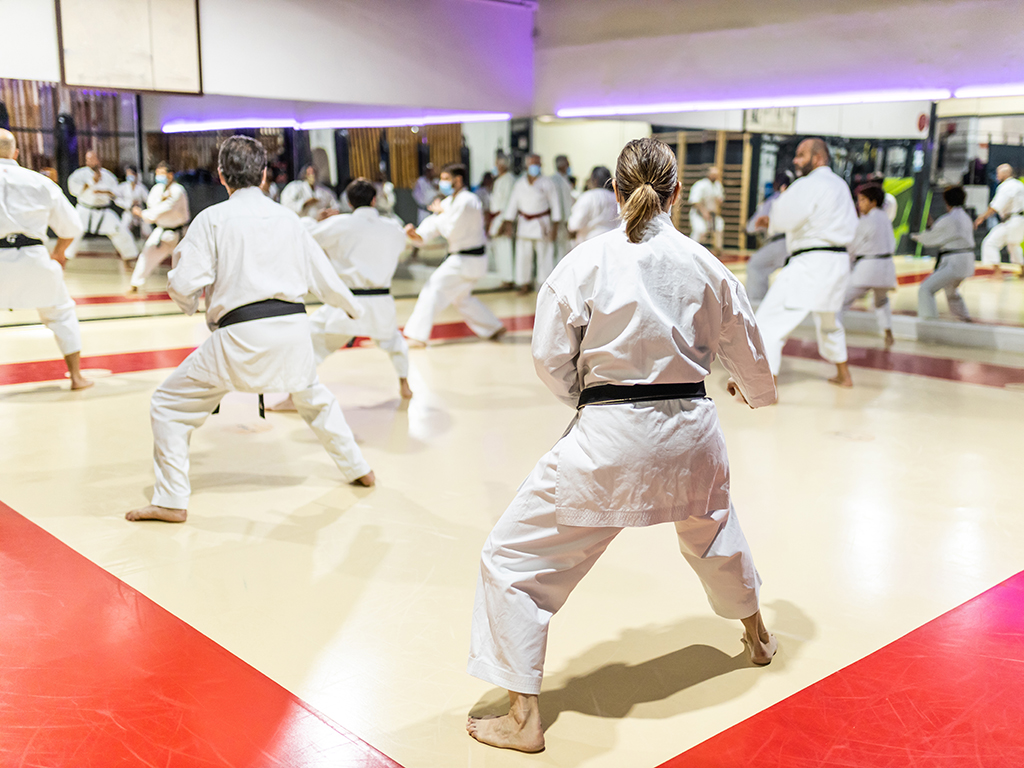
Mastering stances and footwork is essential in Wado Ryu katas, as these elements form the foundation of all techniques. The main stances used include Zenkutsu-dachi (forward stance), Kokutsu-dachi (back stance), and Neko-ashi-dachi (cat stance). Each stance teaches proper weight distribution, balance, and stability. Zenkutsu-dachi emphasizes forward momentum, ideal for delivering strikes, while Kokutsu-dachi focuses on defensive movements.
Footwork in Wado Ryu is light and dynamic, incorporating sliding and shifting techniques to maintain fluid motion. The style’s unique “nagashi” movement (flowing movement) exemplifies the idea of avoiding attacks rather than meeting force with force. Practitioners are taught to shift their weight smoothly, maintaining their balance while evading and counterattacking, a technique that sets Wado Ryu apart from other karate styles.
Strikes and Blocks
Wado Ryu strikes and blocks are characterized by their economy of motion and emphasis on precision over brute strength. The primary strikes include gyaku-zuki (reverse punch), jun-zuki (lunge punch), and mae-geri (front kick). In Wado Ryu, strikes are often executed with minimal wind-up, relying on the practitioner’s stance, body rotation, and timing to generate power. This approach is particularly effective in close combat, where quick, precise strikes can neutralize an opponent efficiently.
Blocking in Wado Ryu incorporates principles of deflection rather than direct confrontation. Key blocks include gedan-barai (low block), jodan-uke (upper block), and soto-uke (outside block). These movements are executed with fluidity, redirecting the opponent’s force rather than opposing it head-on. This deflective nature, combined with the rapid footwork, enhances Wado Ryu’s defensive capabilities and exemplifies the “way of harmony” in combat.
Breathing and Focus
Breathing and mental focus play a crucial role in Wado Ryu katas. Proper breathing techniques, such as ibuki (controlled, deep breathing), synchronize with movements, providing power and maintaining energy throughout the kata. Practitioners are encouraged to exhale sharply during strikes to release tension and enhance force. Focus, or zanshin, is equally important. Zanshin refers to a heightened state of awareness and concentration, essential for executing precise movements and anticipating an opponent’s actions. In katas, maintaining zanshin ensures that the practitioner remains mentally engaged and ready for every movement, reinforcing both technique and mindset.
Mastery of Wado Ryu Katas
Training and Practice
Mastering Wado Ryu katas requires consistent, mindful practice. Beginners should start by learning the basic forms slowly, focusing on accuracy and correct posture. As proficiency increases, practitioners can gradually speed up their movements while maintaining the same level of precision. Repetition is key to building muscle memory, but it’s important to avoid mindless practice. Each repetition should be approached with intent, ensuring that every movement is purposeful and aligned with the principles of the kata. Partner drills, such as bunkai (application of kata movements in combat scenarios), further enhance understanding and help apply kata techniques in realistic situations.
Performance of Wado Ryu Katas
Performing katas with mastery involves more than just memorizing the sequence of movements. Key principles include:
- Timing and Rhythm: The timing of each movement is critical to both offensive and defensive techniques. Practitioners must adjust the speed of their movements to reflect the ebb and flow of combat.
- Breathing: Synchronising breathing with each movement increases efficiency and power. Breathing should be deep and controlled, allowing for sharp exhalations during strikes and blocks.
- Energy Flow (Ki): Practitioners should channel their inner energy, or ki, through each movement. This connection between mind and body enhances the effectiveness of techniques and brings the kata to life.
- Zanshin (Awareness): Maintaining a state of alertness throughout the kata ensures that practitioners are mentally present, ready to respond to any imagined or real threat.
Refinement and Application
As practitioners advance, the refinement of Wado Ryu katas becomes an ongoing process. Advanced students focus on subtle aspects of movement, such as shifting body weight, perfecting footwork, and honing the precision of strikes and blocks. Refining these movements helps transition katas from mere forms to functional, effective techniques in combat. Applying kata principles to real-life scenarios, through sparring or self-defence training, deepens the practitioner’s understanding and integration of Wado Ryu’s philosophies.
Common Wado Ryu Katas
There are several important katas in Wado Ryu, each teaching a range of skills and techniques. Beginners typically start with Pinan Nidan and Pinan Shodan, which focus on basic strikes, blocks, and footwork. Intermediate katas, such as Kushanku and Naihanchi, introduce more complex techniques and body movements, while advanced forms like Chinto and Seishan challenge practitioners with intricate sequences and advanced timing.
Each kata builds on the previous one, reinforcing core principles while introducing new layers of complexity. Mastering these katas requires dedication, but each form offers deeper insight into Wado Ryu karate and its unique blend of fluidity, precision, and evasion.
Conclusion
Mastering Wado Ryu katas is a rewarding journey that enhances both physical and mental skills. From understanding the historical significance of each form to perfecting the techniques through disciplined practice, katas provide the foundation for a well-rounded martial arts practice. Whether you are a beginner or an experienced practitioner, focusing on the principles, movements, and philosophies of Wado Ryu katas will guide you toward mastery and deepen your appreciation for the art of karate.
References:
1. Otsuka, H. (1977). Wado-Ryu Karate. Tokyo: Japan Karate-Do Federation.
2. Lindsey, R. (2004). Wado-Ryu Karate: The Complete Art of Self Defence. London: Tuttle Publishing.
3. Bishop, M. (1999). Okinawan Karate: Teachers, Styles and Secret Techniques. Boston: Tuttle Publishing.